Practicing what I preach…

Every once in a while, things get really tough in life and I find myself struggling. Struggling to find joy, struggling to have hope, struggling to do the things that need to be done.

In a recent sermon, I called this going through a “season of discontent.” It happens. No one (not even Jesus) promised life would be easy. In fact, in the Gospel According to John, Jesus said to the disciples: “in this world you will have trouble.” (John 16:33, in case you want to look it up!) He wasn’t despairing, he was being absolutely honest with the disciples about what they would face as they carried the good news to a broken world.

It has been a time of trouble recently. A season of discontent. For the world as we deal with ISIS, Syria, Ebola, and many other problems. For friends and people within my faith community as they deal with unexpected losses, health issues and uncertain futures. And for myself as I deal with the ongoing pressures and stresses of life in full time ministry.

If someone showed up at my office and talked about feeling this kind of a season of discontent, there are two things I would do. First, I would pray for them, right then and there – so they could hear me lifting them and all of their worries and concerns up before God. (I have friends who do this for me when I need it, and I can attest to how powerful it is to have someone else pray over you.)

The second thing I would do is that I would give them some scripture passages to read. I would make them promise to read the passages daily. The length and complexity of these passages would depend entirely on the individual and what I know of their comfort level with reading and interpreting scripture. But how ever long, short, simple or complex the passage, I can tell you the words would include some the promises God makes to us as His children.

I would give them words like this:

God saved you by his grace when you believed. And you can’t take credit for this; it is a gift from God. Salvation is not a reward for the good things we have done, so none of us can boast about it. For we are God’s masterpiece. He has created us anew in Christ Jesus, so we can do the good things he planned for us long ago.
Ephesians‬ ‭2‬:‭8-10‬ NLT

I would tell them that they are God’s masterpiece. That they are made new in Christ. That even in a dark and sucky season like this, God has made them to do good things that He planned long ago.

So tonite I am practicing what I preach. I am reading this passage for me. I am telling myself those things. And I am letting you read listen in, in case you need to hear them, too.

(Read that passage again. And then again tomorrow morning, and every day that you need a little encouragement. That you need to know you are God’s masterpiece. I plan to.)

Oh, and if you want a few more passages like that, check this out:
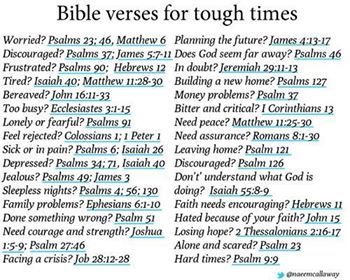
IMG_0022.JPG

The Jude Project: Defend…

Dear friends, I had been eagerly planning to write to you about the salvation we all share. But now I find that I must write about something else, urging you to defend the faith that God has entrusted once for all time to his holy people.
‭Jude‬ ‭1‬:‭3‬ NLT

Jude begins his epistle by stating his reason for writing. Originally he wanted to write about salvation – sharing his insights and understanding of the gift God has given to all believers. But, he says, now he writes to urge the faithful to defend the faith that God has entrusted to them.

Some translations phrase this as “fight for” or “contend for” the faith. Now, I have to admit, this makes me a little nervous – because for some strains of the Christian faith, and for some individual Christians, this might be seen as a free reign to use any and all methods to uphold their understanding of the Christian faith. This is the mindset that lead to the Crusades and to other examples of Christians failing to be CHRISTIAN while they did what they believed needed to be done in order to safeguard the faith and/or to force the faith upon others.

It is a dangerous way of thinking. It ignores the call to peace, to the sanctity of human life, to the sacredness of our ability to choose our belief (or unbelief, for that matter).

The fact is the core of our faith – the person of Jesus Christ – doesn’t need our safeguarding. He’s the Lion of Judah and more than capable of defending himself. That doesn’t mean we shouldn’t “defend,” “fight for,” or “contend for,” our faith. It does mean that we have to understand these terms differently.

I think we are called to defend our faith against the monotony of daily life – to find inspiration when everything seems pretty darned mundane. I think we are called to fight for our ability to love each other – especially when the ‘other’ seems utterly unloveable. I think we are called to contend for kindness and generosity when pettiness and selfishness are easier and more popular. I think we are called to be holy people in an unholy world.

These are hard battles to wage, and yet waging them is everything it means to live out our faith. Not in a way that wounds or alienates others, but in a way that points toward the light of salvation – the truth, the life and the way.

So may you – in humility, in peace, in kindness and love – defend, fight for and contend for your faith. May you live the life we are called to, as holy people in an unholy world.

The truth is like a lion you don't have to defend it let it loose it will defend itself

None so deep…

While working on the next installment of the Jude project, I came across this:

IMG_5422-0.PNG

Pits happen. Whether because of health struggles in our family, stress at work, problems in our relationships, or an unforeseen time of grief and crisis…pits happen.

Doesn’t matter who you are, what you have, or how good things may seem at this moment – it’s a fact of life that sooner or later you will find yourself in a pit.

And when you do, you will need something to pull you up out of the deep. And so I share this with you. Because I simply don’t know a better thought to keep around for your next (ahem) pit-stop.

Corrie ten Boom knew about the pits of life. During the Second World War she was arrested for helping Jews escape persecution and placed in a concentration camp. Though her sister died there, she survived and went on to run a rehabilitation centre for those traumatized by their wartime experiences after the war. She lost a lot, she saw the worst of humanity and she spent time in the deepest pit of modern history. But she refused to stay in the pit because she always knew God’s love to be deeper than the pit.

May you also know that God’s love is deeper than any pit life may throw you into. May you experience his love, even in the lowest pit. May you trust in His love to pull you out of the deep.

For I am convinced that neither death nor life, neither angels nor demons, neither the present nor the future, nor any powers, neither height nor depth, nor anything else in all creation, will be able to separate us from the love of God that is in Christ Jesus our Lord.
Romans‬ ‭8‬:‭38-39‬ NIV

The Jude Project: More and more…

May God give you more and more mercy, peace, and love.
Jude 1:2 NLT

In North America we are kind of obsessed with “more.” More storage on our laptops, more mileage per tank of gas, more returns on our investments, more minutes on our phone plans, more, more, more…

Sometimes I wonder if more will ever become enough (doesn’t seem so when it comes to Gigs on our hard drives, or other storage devices!). I read a short story recently in which the characters were faced with never feeling like anything was “enough.” They would eat themselves sick if they didn’t learn to curb their endless appetites. Sometimes it feels like we live that way. There is a frightening trend toward consumerism that is rife in our society.

And I have long suspected that this obsession with “more” has to do with the fact that we don’t have enough of certain things. Not that we don’t have enough of the things we strive to have more of – no, wanting more of those things is a symptom. I suspect what we don’t have enough of is neatly summed up in the last four words of this verse “mercy, peace and love.”

I suspect if we had enough of those things, the other things would seem a lot less important. I suspect if we had enough of those things, our hunger for more would start to wane. I suspect if we had enough of those things, we would be more concerned with what others might need and less concerned with what we ourselves want.

So I stand with Jude, praying that God will give you (and me!) more and more mercy, peace and love. So that we all might be filled up with the right things and emptied of our desire for the wrong things.

we need more love and dreams

The Jude Project: the safe slave…

This letter is from Jude, a slave of Jesus Christ and a brother of James. I am writing to all who have been called by God the Father, who loves you and keeps you safe in the care of Jesus Christ.
Jude‬ ‭1‬:‭1‬ NLT

Often in the Bible we come across verses that almost seem like part of the background: a list of names or places, a detail about where the events took place, or the official opening greeting of a letter or epistle. Sure, these details were important to the people of the day, and certainly they help biblical scholars authenticate the writings, but do they have anything to do with my – with your – everyday life?

This is what I call “the ‘so what?’ question.” As in, so what does this have to do with me? With how I am living and the struggles I am dealing with each day?

Well, the first thing that jumps out at me is Jude’s reference to himself as a slave of Jesus. I don’t like that word. It has some pretty horribly negative connotations given the history of humanity to this point in time. The word kind of makes me squirm. It brings up images of abuse and degradation. In fact, some translations prefer the softer word, “servant.”

But I think Jude chose slave on purpose. Because I think Jude knew that being a slave of Jesus would not be like being a slave to an earthly master. He talks of being “safe in the care of Jesus.” I think he chose the word slave to grab his reader’s attention. To make them ask why anyone would choose to be a slave – what was so different about Jesus that it made a man willing to be his slave?

I think Jude wanted his readers to know that he was fully and willingly submissive to the will of Christ and that he felt absolutely safe in that. I think that Jude knew that Jesus would never abuse or degrade him, that the will of Christ would always hold far better things for him than his own personal will would.

And that’s what we can know, too. There is no place safer than the centre of Christ’s will. What he wants for each of us is better than we can ask or imagine for ourselves.

So bend a knee, friends, to the master who will never let you down, and in whose care you will always be perfectly safe.

IMG_0006.JPG

Surprised by GRACE…

IMG_5374.JPG

About this time last year we launched our GRACE Groups network at St. Andrew’s. GRACE Groups are geographically defined and exist to Glorify God, build Relationships, do Acts of Service, create Caring Community and further our spiritual Education (G. R. A. C. E.).

These groups have been a joy to oversee and to participate in. My group has done some gardening around the church, had some really great times of fellowship, studied John Ortberg’s God is Closer than You Think and made Christmas tree ornaments for the children of our church as a ‘thank you’ for their presentation on Pagaent Sunday in Advent.

Through my group I have gotten to know some of the folks in the pews, been encouraging of them as well as encouraged by them, and shared in times that simply did my soul some real good.

Tonite, after arriving home from my regular class at the gym, I was called by my co-leader to come over to the church for a moment. When I arrived, I found my group BBQing burgers, putting out salads and wearing “happy birthday” hats. My birthday isn’t for another 5 days, but my group wanted to celebrate with me and they wanted to surprise me. They succeeded in both.

In the five points that make up the GRACE acronym, I think Caring Community might be the most nebulous. But my group showed me this evening what that looks like. By coming together, gathering a little food and sharing their time and laughter, my group showed the depth of their care for me. And I was so touched and so blessed by it.

If you are a member of St. A’s and want to get connected with a GRACE Group, please come speak to me about it. If you are already involved with a GRACE Group or if you are a coordinator, why not spend a little time thinking about how you can embody Caring Community? Ask yourself if there is someone in your group or in your neighborhood who could use a kind little touch – a bit of baking, a “thinking of you” card, an errand that they might need help with – to brighten their day. When we care for others, we show God’s love and kindness to them in ways that are deeper than words.

Love each other with genuine affection, and take delight in honoring each other. (‭Romans‬ ‭12‬:‭10‬ NLT)

IMG_5373.JPG

IMG_5370.JPG

The Jude Project: It’s coming…

IMG_0005.JPG

So I mentioned in my last blog that there are times when it is hard to come up with the words or ideas for regular new posts. That happens in preaching, too. It is more than possible to sit down to prepare a sermon and be hit by a terrific case of writer’s block and the sneaking suspicion that you have literally said it all before.

The way I combat that in preaching is to work in series: 4-6 week thematic or topical progressions. That way there is always a meta-narrative to touch upon, an over-arching idea from which to begin that week’s conversation. My easiest seasons of blogging follow a similar pattern: working through the season of Advent or Lent, and continually touching on the themes and events of those seasons.

But what to do when it isn’t Advent, when it isn’t Lent? When the inability to decide upon a topic leads to the inability to write a post?

Sometime in the past several months of not blogging, it occurred to me that I needed to come up with a project for those “off seasons.” Then it occurred to me that it should probably be a Bible-based project. Then it occurred to me that the simple thing would be to choose a book of the Bible and work through each verse – one verse, one post.

So, I give you the Jude Project. I chose The Epistle of Jude because it’s a book I don’t know that well (yes, even ministers have books of the Bible we don’t know that well…there are 66 of them, and some of them are really long…it’s a big book of books and we don’t have it memorized!). I thought I should choose something that would benefit me as much as my readers. Because when I am blogging regularly, it really does become a spiritual practice in my life. And getting to know an unfamiliar book of Scripture sounds like a very good spiritual practice to me.

So – The Jude Project will start this week. I expect I will also blog about other things alongside of The Jude Project. I don’t want to be tied to this project, ahem, religiously. But I do think it will help me in the practice and discipline of regular blogging. And I’m very much looking forward to it.

The Jude Project: it’s coming, people. But for now, I will leave you with this verse, which I believe to be true and which has always been a guiding principle in my life and vocation:

All Scripture is inspired by God and is useful to teach us what is true and to make us realize what is wrong in our lives. It corrects us when we are wrong and teaches us to do what is right.
‭2 Timothy‬ ‭3‬:‭16‬ NLT

Accountable…

IMG_5276.JPG

One thing about preaching – it keeps you honest. I told my congregation in last Sunday’s sermon that I would be returning to blogging this week. And as the (short, because of a holiday) week has rolled on, I began to wonder if I would find the time and inspiration to actually get a blog written. And then I remembered: I said it in a sermon, in front of God and everyone. I could (and should!) be held accountable if I let the week slip past without a blog.

I’ve learned the value of accountability over the past few years, while I’ve been on a weight loss and fitness journey. I am ten times more likely to make it to the gym, or do a workout at home, if I know my online group of workout friends are waiting for me to post what I’ve done for the day. They aren’t putting any pressure on me – in fact, they are incredibly supportive and understanding when it comes to ‘I just didn’t have it in me’ days. But just knowing that there is an expectation (even if it is my own) that I will post saying what class I did that day or how many push-ups I managed at home, makes me more motivated to get it done.

The same can be said about blogging. I love this blog, and I love that people tell me that they miss it when I go silent for a while. But as with all writing, sometimes you go through a dry time: when the words and ideas are just dried up, not flowing. For me, that happens when I am tired. I took some time off after Easter, I was tired. But the problem with that bit of a rest was that it stretched into a little more time off, and then I had a hundred reasons why I was too busy the next week and the next week and the next week.

So I am glad that the Spirit moved me to put an accountability clause in last week’s sermon. I am glad that dry times don’t last forever, and I very much look forward to a new season of blogging. Beginning now.

Is there something you need to be held accountable for? Something in your spiritual journey or a need to commit to some exercise or a change in your eating habits? Maybe a time away from screens and work so you can build up relationships with those closest to you? Think about it, pray about it. And then invite someone you trust to help hold you accountable. Often just knowing you had that conversation with whomever that person is for you, will be enough to keep to your commitment.

May you find blessing in being held accountable to your commitments and may God provide the right person to go that road with you.

Two people are better off than one, for they can help each other succeed. If one person falls, the other can reach out and help. But someone who falls alone is in real trouble.
Ecclesiastes‬ ‭4‬:‭9-10‬ NLT

Breath…

20140527-212608-77168026.jpg

So I’ve been doing some yoga classes recently. I started taking yoga because a friend of mine is learning to be a yoga instructor, and I wanted to encourage and support her. It’s been an interesting experience.

In my younger years I tried yoga at my local gym, but was deeply uncomfortable with the practice of offering prayers (to the best of my memory addressed to the “sun god”…or maybe just to the sun itself) at the beginning and end of class. So I decided that yoga was not for me.

The classes I’ve been attending recently do not include prayers to any deity at the begging or end of class. I have found that the practice of yoga is a great compliment to the weightlifting I do regularly: it has loosened the knots that arise out of the practice of weightlifting.

One of the elements that is important to the practice of yoga is connecting with your breath. And as we practiced during an outdoor class today, a warm and very persistent breeze surrounded us. I was reminded of Rob Bell’s Nooma video entitled “Breathe,” in which he teaches that the name of God in Hebrew is actually four consonants: YHWH. In English we have often inserted vowels to make this a pronounceable word (“Yahweh,” or in the old-school, “Jehovah”). But if you actually attempt to pronounce the name of God in Hebrew, it sounds an awful lot like breath. YHWH. Try it, it sounds like breathing out.

Bell makes the observation that maybe every breath is a chance to connect with God. That maybe even our breathing is holy. I like that.

And as I continue to practice yoga, I find that even in this I am not far from God. He is, as always, as close as my breathing.

Let everything that has breath praise the Lord. Praise the Lord.
Psalm 150:6 NIV

Abide…

20140422-224327.jpg

Easter 2014 is over. The turkey was devoured by my family, the hymns and anthems were sung by my church family, scriptures were read, there was joy and celebration, sunshine and flowers. The tomb was empty and The Lord is risen!

And now, it’s just back to regular life. At least, sometimes it can feel that way. But Easter, just like Christmas, was never meant to be kept to a day -or even a few days – of celebration. Easter, like Christmas, is meant to be kept the whole year through. We should wake each morning knowing that the tomb is empty, that our Lord is risen, that death has lost it’s sting and the bonds of sin are broken.

We are meant to dwell, to abide, to linger in these high and holy places. We are meant to live each day in celebration of eternal life , thankful for all that God has done for us through Jesus Christ.

So don’t rush away, friends. Don’t get too busy with other things, with the schedule and the to-do list and the hustley-bustley pace of your week.

Remember.
Dwell.
Linger.

Abide.

If you abide in Me, and My words abide in you, you will ask what you desire, and it shall be done for you.
John 15:7 NKJV